 Panacea Bio Chem · Compound Investigation
Compound investigation · Mitochondria-targeted peptides
HDAP2 — the high-density aromatic peptide that tells mitochondria to hold.
HDAP2 (Biotin-dArg-Phe-Phe-dArg-amide) is a mitochondria-targeted peptide built by a CUNY research team to keep mitochondrial membranes intact under cellular stress. In their 2026 optic-nerve study it crossed the blood-retinal barrier, reached the retinal ganglion cells, and stopped the mitochondria from disappearing. Panacea Bio Chem investigates this peptide.
Original research: MacNeil MA, Arain S, Mentor W, Garcia-Marin V, Birk A — Neuroscience 598:187–199 (2026) · DOI 10.1016/j.neuroscience.2026.01.045 · full text free at PMC13080697
In one paragraph: HDAP2 is a tiny five-part peptide — a biotin tag, two D-arginines, two phenylalanines, an amide cap — designed to walk into stressed cells and hold their mitochondria in place. After optic nerve crush in mice, daily HDAP2 kept mitochondrial density in injured nerves at nearly threefold the untreated level, close to uninjured controls, and retinal ganglion cell survival improved across every retinal region measured. It prevents the loss; it does not claim to undo it.
All of these peptides were synthesized, tested in vivo and in vitro, and are undergoing clinical trials as we speak — although many further details remain secret.
The molecule
HDAP stands for high-density aromatic peptide. The CUNY team designed it to carry a dense aromatic core between charged arginine wings — a shape that reads like a bracket holding a photograph:
Biotin–dArg–Phe–Phe–dArg–amide. Sequence as published in MacNeil et al. 2026 (synthesized for the study by GenScript).
Three design choices carry the whole molecule: the D-arginines (cationic wings that drive cell entry and resist proteases), the Phe-Phe aromatic core (the "high-density" heart that sits in mitochondrial membranes), and the terminal amide cap (the small C-terminal closure that small signalling peptides have used for half a billion years — the same feature that makes APGWamide work).
What it was built to do — and what the study showed
Mitochondrial dysfunction is one of the earliest drivers of retinal ganglion cell death after optic nerve injury. HDAP2 was designed for that exact pressure point: support mitochondrial membrane integrity while the cell is under stress. The 2026 CUNY study (optic nerve crush in C57BL/6 mice, both sexes, n = 31) measured it end to end:
| Measured | HDAP2 result (daily, systemic) |
|---|---|
| Blood-retinal barrier | Penetrated; localized to retinal ganglion cells and mitochondrial-rich retinal layers |
| RGC survival | Significantly improved vs saline — across central, midperipheral and peripheral retina |
| Mitochondrial density in crushed axons (TEM) | Nearly 3-fold higher than untreated; approached uninjured controls |
| Mitochondrial morphology | Unchanged across groups — HDAP2 prevents loss, it does not rescue damaged organelles |
| Structurally intact axons | Numerically higher density — less ultrastructural degeneration |
The authors' conclusion: HDAP2 limits mitochondrial loss and attenuates neuronal degeneration after optic nerve crush — a candidate for protecting CNS projection neurons by maintaining mitochondrial stability after axonal injury.
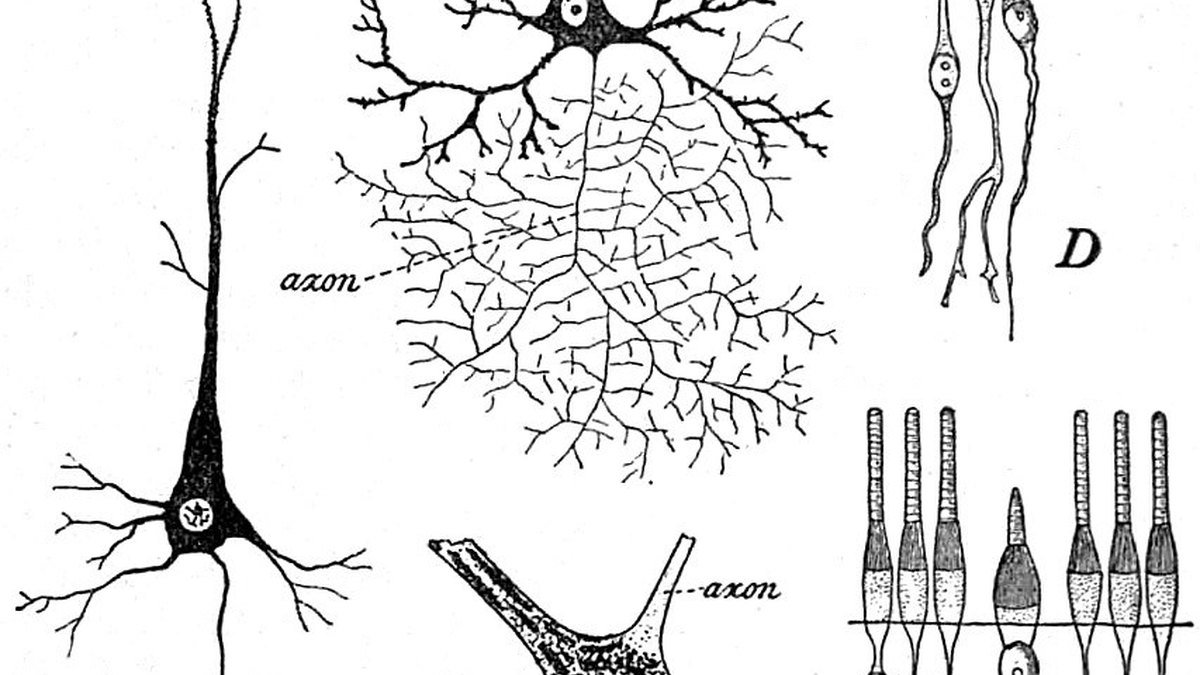
Citation: MacNeil MA, Arain S, Mentor W, Garcia-Marin V, Birk A. "The mitochondria-targeted peptide HDAP2 reduces mitochondrial loss and retinal ganglion cell degeneration after optic nerve injury." Neuroscience 598:187–199, 2026. PubMed 41633465 · free full text.
The class it belongs to — and the theories around it
HDAP2 sits in the aromatic-cationic family of mitochondria-targeted peptides — the lineage that runs through elamipretide (SS31) and its relatives: small, cell-penetrating, drawn to mitochondria by charge and held there by aromatic contact with the membrane. The working theory of the whole class is that a peptide small enough to walk through tissue and lipophilic-cationic enough to sit in a membrane can protect the organelle that decides whether a stressed cell lives. HDAP2's contribution to that theory is density: a high aromatic load per residue, and a prevention-first profile — hold the membrane, never lose the mitochondrion.
Credit where credit is due
HDAP2 was designed and published by Mark A. MacNeil, Sheherbano Arain, William Mentor, Virginia Garcia-Marin and Alexander Birk — Department of Biology, York College of the City University of New York, and the CUNY Graduate Center. Therapeutic applications of HDAP2 are patented by The Research Foundation, CUNY (inventors MacNeil and Birk); at publication the patent holders reported no commercial relationships related to it.
Panacea Bio Chem investigates HDAP2 and claims no invention. Everything we know about it comes from their published work, and it is linked in full on our references page.
Why Panacea Bio Chem investigates it
Because HDAP2 is exactly the kind of molecule this house exists for: a small, delicate, terminally amidated aromatic peptide whose entire value lives or dies with its formulation, preservation and delivery. A peptide that prevents mitochondrial loss is only as good as its own survival between synthesis and the cell. That is the part of the problem Panacea works on — keeping delicate peptides intact, cold-chain or not, and delivering them in a state worth measuring.
Why this investigation sits at Panacea
Frequently asked
What is HDAP2? A high-density aromatic peptide (Biotin-dArg-Phe-Phe-dArg-amide) designed by a CUNY research team to support mitochondrial membrane integrity under cellular stress — a mitochondria-targeted research peptide.
What is the HDAP2 sequence? Biotin-dArg-Phe-Phe-dArg-amide — published in MacNeil et al., Neuroscience 598:187–199 (2026).
What does HDAP2 do? In the 2026 study it crossed the blood-retinal barrier, reached retinal ganglion cells, and prevented mitochondrial loss after optic nerve crush — nearly threefold higher mitochondrial density than untreated nerves, with RGC survival improved across all retinal regions.
Who invented HDAP2? MacNeil, Arain, Mentor, Garcia-Marin and Birk at CUNY; therapeutic applications are patented by The Research Foundation, CUNY. Panacea Bio Chem investigates the peptide and claims no invention. More on the FAQ page.
Recent developments in the field — refreshed 2026-10-09 by Panacea Bio Chem.
- Engineering Emulgel-Based Inks for 3D Printing Scaffolds with Enhanced Porosity for Supporting Cell Proliferation — PubMed, 2026 Oct 8
- Spatially Controlled Release from Printable Microgels for Embedded Bioprinting — PubMed, 2026 Oct 7
- Cryogenic 3D-printed PLGA/nano-selenium scaffold for bone regeneration: a dual-functional strategy synergistically regulating macrophage polarization and osteogenic differentiation — PubMed, 2026
- Lian-Jia-San-Jie formula suppresses non-small cell lung cancer via FTO-dependent m(6)A demethylation regulation of lncRNA CASC9 and its downstream CD3EAP — PubMed, 2026 Dec